How to Build an AI Advisory Board for Your Business
How to build an AI advisory board for your business: five seats, one prompt and the newest tools, for advice that pushes back instead of agreeing with you.
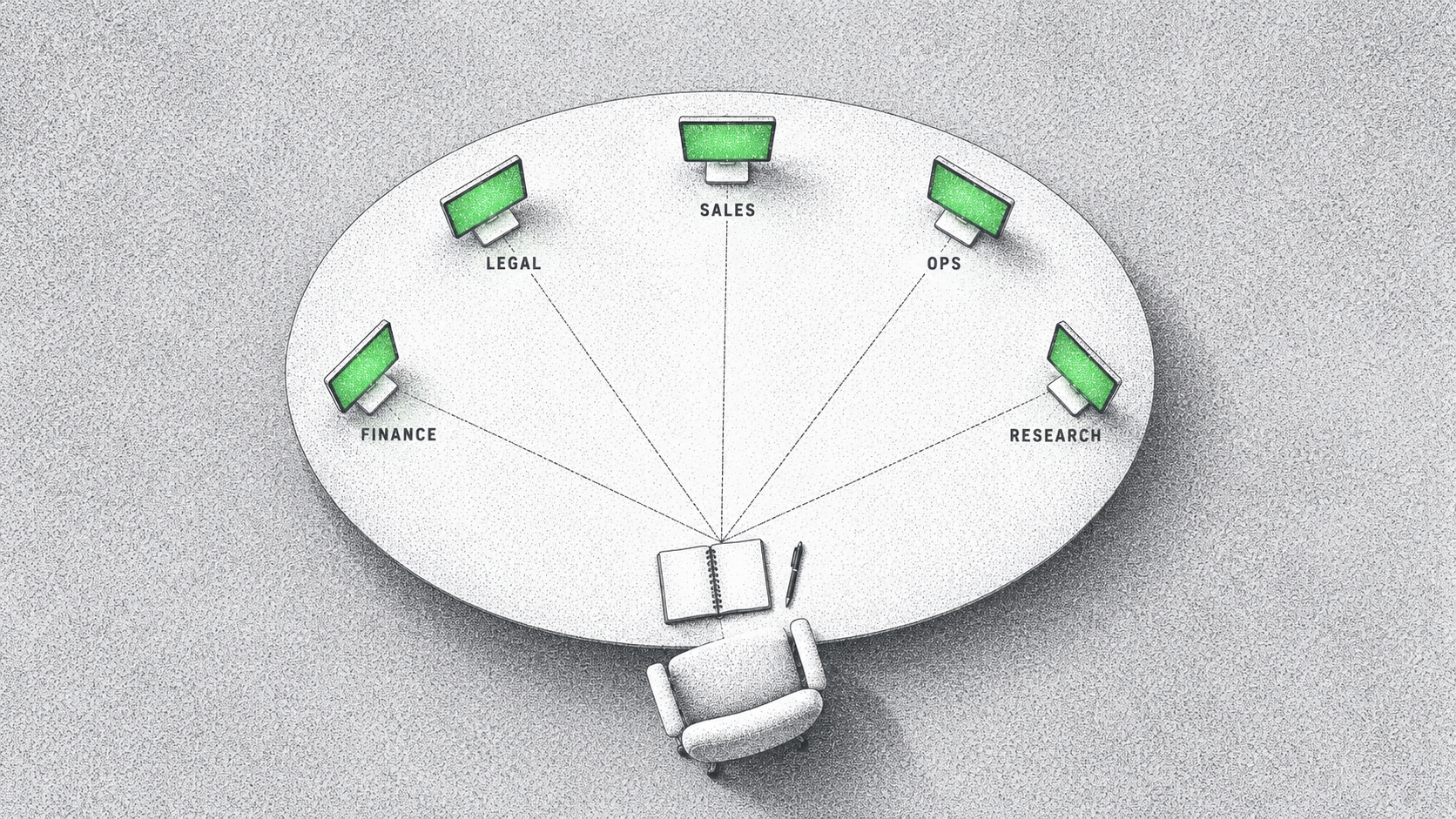
Big companies have boards. Most small businesses have an owner, a spreadsheet and a late night. So when a decision comes up, like whether to hire, raise prices, or take the big client who pays late, more owners are asking AI instead.
The trouble is that AI is a terrible yes-man. A Stanford study published in Science in March tested 11 leading models, including ChatGPT, Claude, Gemini and DeepSeek. On general advice questions, the models endorsed the user 49% more often than humans did. In a follow-up with more than 2,400 people, participants couldn't tell when the AI was being overly agreeable, and rated the flattering version just as objective.
Asking the AI to "be honest" doesn't fix this. Structure does. An AI advisory board gives one assistant several seats, each with a different job, so the pushback is built into the process instead of being left to chance. Here's how to set one up with the newest tools, and how to stop it simply agreeing with you.
Why a single AI makes a bad adviser
It isn't malice. Models are partly trained on human ratings, and people rate warm, supportive answers highly. Over time, agreement gets rewarded.
The industry knows it. In 2025, OpenAI rolled back a ChatGPT update after admitting it had become "overly supportive but disingenuous". The fix improved things, but the Stanford results show the tendency runs across every major model.
For a business owner, this is costly. An assistant that confirms your pricing, your hire and your expansion plan feels helpful right up until the cash runs out.
Who sits on the board
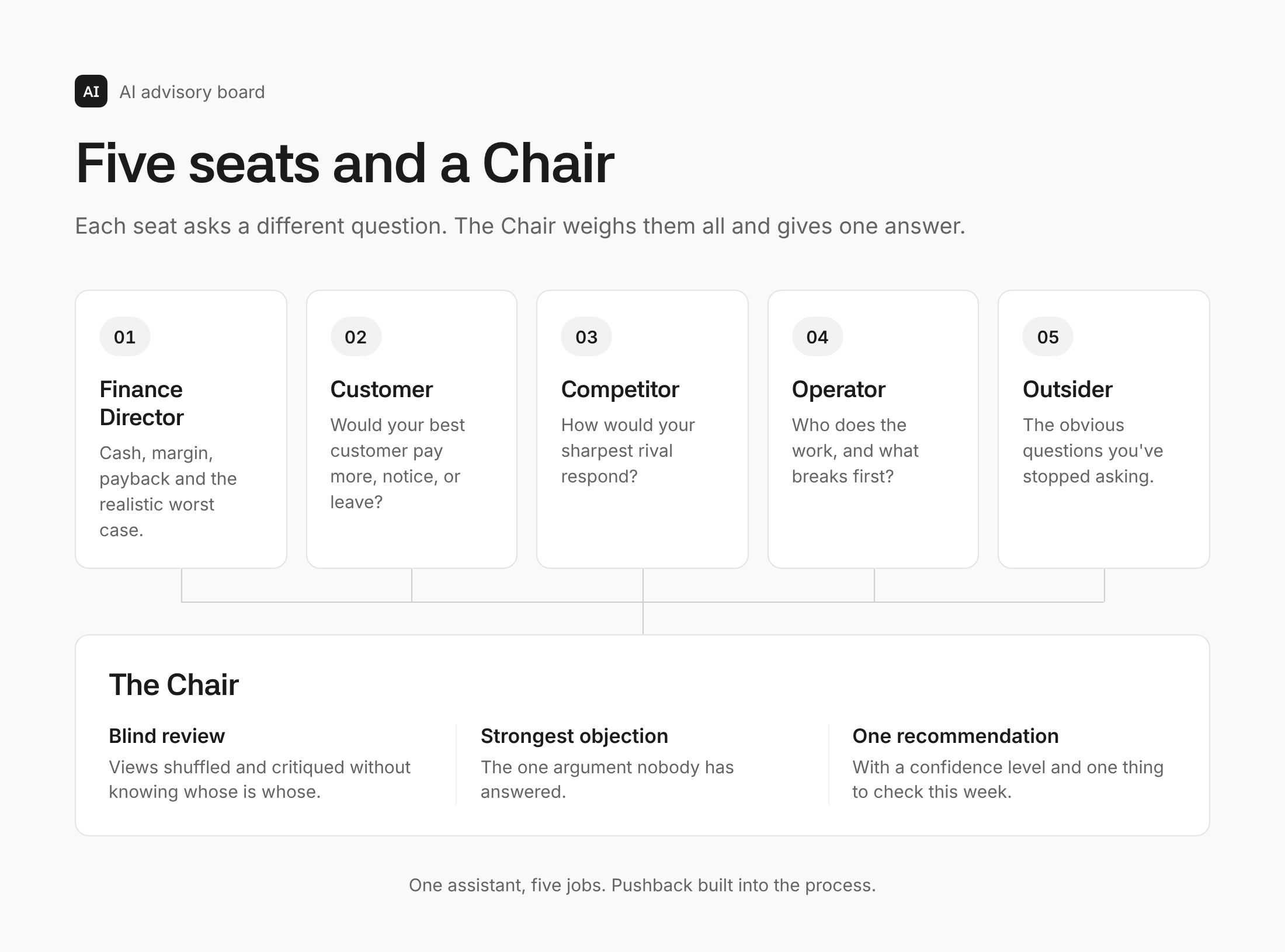
Five seats, each built around a question a real board would ask. Together they cover cash, customers, competition, delivery and blind spots.
- The Finance Director. Looks only at money: cash flow, margin, payback period and the realistic worst case. This seat is never optimistic.
- The Customer. Speaks as your best existing customer. Would they pay more, notice the change, or leave?
- The Competitor. Imagines being your sharpest rival. How would they respond, and what would they love you to get wrong?
- The Operator. Ignores strategy and asks who actually does the work, what breaks first, and what happens on Monday morning.
- The Outsider. Knows nothing about your industry and asks the obvious questions you've stopped asking.
A Chair then reads all five, asks each to review the others' arguments without knowing which seat wrote them, and gives one clear recommendation. That blind review matters. A model defends an answer it knows is its own and critiques one it doesn't.
Which tool to build it in
The board works in any good assistant, but the tools now split into two camps.
A standing board in one assistant. This is the right home for most owners, because your business context stays loaded between decisions.
- Claude Projects hold instructions and uploaded files, and free accounts get up to five. On Team plans, a project can be shared with colleagues.
- ChatGPT projects work the same way and can now be shared on every plan, with Business workspaces able to share with whole groups.
- Gemini added a settings hub in October where you can save custom skills and response preferences, which can hold the board's rules.
A board of genuinely different models. Every seat in a single assistant shares the same underlying blind spots. A multi-model tool fixes that.
- Perplexity's Model Council, launched in February, runs one question through three models and has a fourth summarise where they agree and disagree. At launch it was web-only and limited to the top Max plan.
- Microsoft added Critique and Council to Copilot's Researcher tool in March, according to reports, pairing OpenAI and Anthropic models so one checks or runs alongside the other. It sits in Microsoft's Frontier early-access programme for business customers.
The verdict. Build the board as a project in whichever assistant you already pay for. For the handful of decisions a year that could sink the business, run the same brief through a second, different assistant as well. Doing that by hand costs nothing and gets you most of what Model Council offers.
How to set it up
About 20 minutes, most of it on the first step.
1. Write a one-page business brief
Revenue, margins, team size, main customers, cash in the bank, and your goals for the year. Real numbers. This becomes the project's knowledge, so you never type it twice.
2. Create the project and add the board instructions
Paste this into the project's instructions:
You are my business advisory board. For every decision I bring, answer in four rounds. Round one: five board members each give their view in under 150 words. The Finance Director looks only at cash, margin, payback and the realistic worst case. The Customer speaks as my best existing customer. The Competitor plays my sharpest rival. The Operator asks who does the work and what breaks first. The Outsider knows nothing about my industry and asks obvious questions. Round two: shuffle the five views, label them A to E, and have each member critique the others without knowing which is theirs. Round three: the Chair names the strongest objection nobody has answered. Round four: the Chair gives one recommendation, a confidence level, and the single thing I should find out this week before committing. Never soften a view to be encouraging. Use the business brief in this project for context.
3. Bring a real decision, with its numbers
Vague questions get horoscopes. Compare these two:
Should I raise my prices?
I run a bookkeeping practice with 42 monthly clients at an average of $350 a month. My two staff are at capacity and I'm turning away about three enquiries a month. I'm considering a 20% increase for new clients now and existing clients in January. Three clients have been with me eight years and I'd hate to lose them. Should I raise prices, and if so, how?
4. Push it to disagree
The Stanford team found that simply telling a model to start its answer with "wait a minute" makes it more critical. It's a useful nudge if a board meeting reads too comfortable.
5. Attack the recommendation
For anything big, open a fresh chat, ideally in a different assistant, and paste in the Chair's verdict with this:
Try to prove this recommendation wrong. What would make it dangerous, incomplete or misleading for a small business in my position?
How to read the minutes
Read the Finance Director first. If something there makes you want to argue, that's the signal to slow down. Then read the Operator, which tells you whether the advice survives contact with your actual week.
Read the Chair's verdict last. By then you'll know whether it took the objections seriously or glossed over them. If the verdict feels wrong after reading everything else, trust that instinct. It's a thinking tool, not an oracle.
Where it goes wrong
- Every seat is the same brain. Five personas from one model share its blind spots, which is why the second assistant in step five matters for big calls.
- You bring the answer with you. If the brief reads like you've already decided, the board will politely agree. Write the decision neutrally, and list the options you're genuinely weighing.
- The brief goes stale. A brief from January gives advice based on January's cash position. Update it every quarter, or whenever the numbers move.
- You share what you shouldn't. Client names, staff salaries and contract terms don't need to be in the brief to get good advice. Use rounded figures and roles instead of names.
- It sounds like an expert. The board can make the case well, but it isn't a qualified accountant or lawyer. Use it to prepare the questions you take to one, not to replace them. AI Manual's guide to how to tell when an AI is guessing is worth reading before trusting any figure it gives you.
Advice built around your business
A board is only as good as the brief behind it, and most owners don't know which questions their brief should answer.
AI Manual is building a system that starts there: a short onboarding about your business and goals, then advice and playbooks tailored to it, including the decisions you didn't know you should be weighing. It isn't open yet. Contact us and you'll be among the first in.
Frequently asked questions
Do I need a paid plan to build an AI advisory board?
No. Free Claude accounts include up to five projects, and the prompt works pasted into any chat. Paid plans help with longer briefs and more uploaded files.
Which AI is best for business advice?
The differences between the leading assistants matter less than the brief and the structure. The bigger gain comes from using two different assistants on important decisions, because they don't share the same blind spots.
Can I base board members on real business figures?
You can ask a seat to argue the way a well-known investor or founder might, and it can sharpen the debate. Treat it as an imitation built from public material, not that person's actual view of your business.
How often should I use it?
For decisions that would cost real money or time if you got them wrong: hiring, pricing, big clients, new products. For everyday calls, a normal question to an assistant is quicker and good enough.
The habit worth building
The value of a board isn't the recommendation. It's the objection you wouldn't have raised yourself. Build the project once, keep the brief current, and make running a decision past it as routine as checking the bank balance.
Start with the decision you're putting off right now. Put it to the board this week, and pay most attention to the seat you most want to ignore.