How Private Are Your AI Chats, Really?
People tell AI chatbots things they wouldn't tell their friends. Health worries, money trouble, the email they're too nervous to send. It feels like a private conversation.
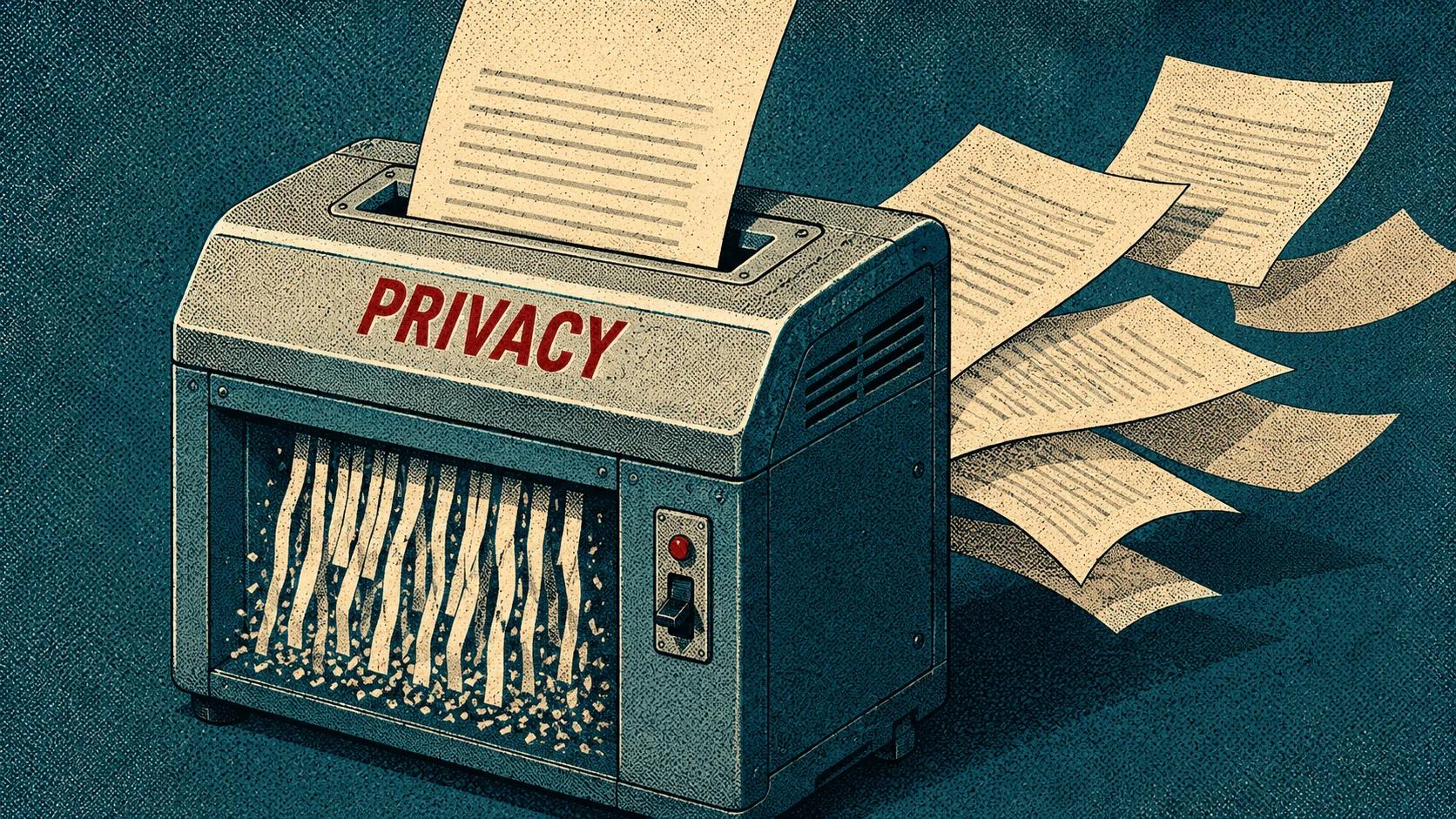
People tell AI chatbots things they wouldn't tell their friends. Health worries, money trouble, the email they're too nervous to send. It feels like a private conversation. The honest answer to how private it actually is: less than you think, and it depends almost entirely on settings most people never open.
The default setting is "share"
On the free version of most major chatbots, your conversations are used to train the model unless you turn that off. "Training" just means your words become part of the material the system learns from. The opt-out usually exists, but it's buried in a settings page, and the toggle is off by the time most people think to look for it.
The counterintuitive part: paying doesn't fix this. On several paid individual plans, conversations are still used for training by default. The upgrade buys you faster models, not more privacy.
Then there's the word "delete," which does less than it sounds like...
The rest is for subscribers. Below: why deleting a chat doesn't always delete it, the one case where your chats genuinely left the building, and the settings that actually move the needle.
"Delete" doesn't mean gone
Deleting a conversation removes it from your history. But if that conversation was already used to train the model, the influence is baked in and can't be pulled back out. And even when training is off, providers typically keep chats for around 30 days for safety and abuse monitoring. "Deleted" often means "queued for deletion," not "gone."