Why Your AI Suddenly Feels Worse, and How to Check
Wondering why your AI feels worse? Six reasons ChatGPT, Claude or Gemini suddenly seem dumber, from model routing to thinking settings, and a ten-minute test.
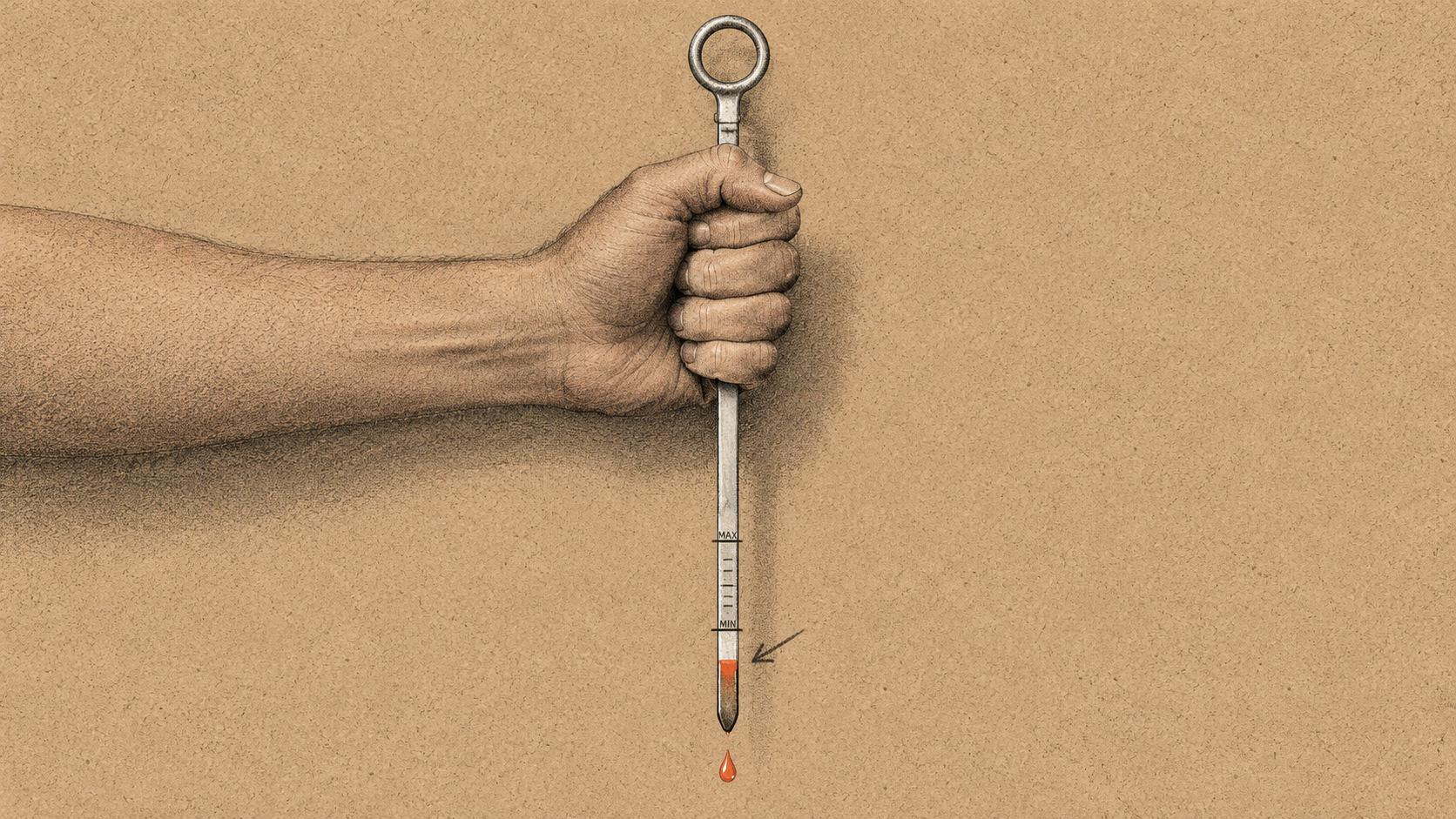
It happens to everyone eventually. The assistant that was sharp last Tuesday is vague on Thursday. Answers get shorter, or longer and emptier. It forgets what you said three messages ago. You wonder whether the company quietly swapped in a cheaper model.
Sometimes something did change. In the last year both OpenAI and Anthropic have published explanations for periods when their products got measurably worse. But usually the model is the same and something around it moved: a setting, a limit, a memory, a default.
Six causes, in the order to check them, and a ten-minute test that tells you whether it's the AI or the way you're using it.
Cause 1: You're on a different model than you think
The name at the top of the chat is not always the model that answered.
ChatGPT has spent 2026 reshuffling its model picker. GPT-5.1 was removed on 11 March and existing chats were "auto-routed" to newer models. GPT-5.2 went in June, GPT-4.5 at the end of June, o3 on 26 August. If you had a favourite, your old conversations are now being continued by something else.
There's also the fallback. OpenAI's release notes say that when you hit a thinking limit, "ChatGPT may continue with another available model", and earlier this year named smaller "mini" models as that fallback. You don't get a banner. The replies just get thinner.
Gemini says so plainly: reach your limit on a paid plan and "you can continue your conversation with Flash-Lite", the smallest model in the family.
Claude is the exception. The model is whatever you picked, and Anthropic's help page says "the selected model and effort level appear next to the send button". But Anthropic retires models too: Opus 4 and 4.1 left the picker in January. A newer model is not automatically better at your particular task.
How to check: open the model picker and look at what's selected right now. On ChatGPT, use the three-dots menu under a reply to regenerate it with a heavier model and compare. ChatGPT will tell you which model is active if you ask, though I couldn't verify that the app labels each reply on its own.
Cause 2: The thinking level changed
Modern models can "think" before they answer: they work through the problem in hidden text first, which makes them slower, dearer to run, and usually better. How much thinking you get is a setting, and settings change.
The clearest evidence is Anthropic's postmortem from 23 April 2026. Complaints that Claude Code had got worse were traced to three product changes, none of them to the model itself. The one that hurt most: the default reasoning effort had been dropped from high to medium between 4 March and 7 April. In Anthropic's words, "Users began reporting that Claude Code felt less intelligent." A caching bug was also wiping earlier thinking on every turn, and a prompt instruction capping it at 25 words between actions cost "a 3% drop" on their own evaluations.
Same model. Three knobs turned. Weeks of "it got dumber".
ChatGPT made a structural change here on 14 September 2026. OpenAI is "retiring automatic switching from Instant to Thinking" for Plus and Pro subscribers. Until then, a hard question in Instant mode could be quietly upgraded to a thinking model. Now it won't, unless you pick Medium, High or Extra High yourself. If your ChatGPT feels worse this week specifically, this is almost certainly why.
Claude has an effort control with five levels, and its help page notes that Low and Medium "stretch your usage further". If you dropped it to save your allowance and forgot, that's your culprit.
How to check: set thinking or effort to the highest level your plan allows and re-ask the exact question that disappointed you.
Cause 3: Memory is steering the answers
All three major assistants now remember things across chats, on by default. A stored "keep answers brief" from a busy week, or a detail from a project you've finished, keeps shaping replies long after you've forgotten saying it.
OpenAI is candid about this: its help page says a saved memory that conflicts with your chosen personality "may override or reduce the visible traits of that personality". ChatGPT also has a "Fast answers" toggle under Personalization which skips personalisation entirely, so if that's on, the assistant is ignoring everything it knows about you.
If the decline was gradual rather than sudden, this is the most likely cause, and it's worth reading the full guide to clearing out the memory that makes your AI worse over time before you touch anything else.
How to check: start a Temporary chat in ChatGPT or an Incognito chat in Claude, which don't use memory, and ask the same question. If it's better, memory is the problem. In Claude, Settings then Memory lets you edit individual entries; ChatGPT shows memory sources under a book icon beneath the reply.
Cause 4: The chat is too long
Every model has a context window: the amount of text it can hold in mind at once, including your whole conversation so far. Anthropic calls it "Claude's working memory for a single chat". When you run out, apps don't stop. They summarise the older parts of the conversation, or drop them, and the model carries on with a compressed version of what you said.
That's when it "forgets" the file you uploaded an hour ago or reverts to a format you told it to abandon. It no longer has the original.
How to check: copy the essentials into a new chat and ask again. If the new chat is sharper, you'd hit the wall.
Cause 5: It's actually broken
Sometimes the model really is worse, for everyone, and the company says so afterwards.
In September 2025, Anthropic published a postmortem on three overlapping infrastructure bugs that had degraded Claude for over a month: misrouted requests, stray Thai and Chinese characters in English replies, and a compiler fault producing wrong output. Their evaluations, they admitted, "simply didn't capture the degradation users were reporting".
In August 2025, Sam Altman said on Reddit that ChatGPT's "autoswitcher was out of commission for a chunk of the day, and the result was GPT-5 seemed way dumber".
How to check: status.openai.com, status.claude.com, and Google's Workspace status dashboard for Gemini. If the drop was sudden and other people are complaining at the same time, look here first.
Cause 6: Your prompt is doing less than you think
The unglamorous one. After months with the same assistant, you've probably drifted into shorthand. The model that impressed you in January was reading a paragraph of context; now it's getting six words.
Before blaming the model, write the brief you'd have written on day one. There's a whole argument that better prompts matter more than which model you use, and it's the cheapest thing on this list to try.
The ten-minute test
This is the part that separates a feeling from a fact.
- Pick one prompt you know well. Something you've asked before and know what a good answer looks like. Save it in a note.
- Pin everything. Choose the model explicitly. Set thinking or effort to the same level every time. Use a temporary or incognito chat so memory stays out of it.
- Run it in a new chat. Save the reply with the date, model name and effort level.
- Repeat in a week, with identical settings. Now you have a comparison, not a mood.
- If it's worse with everything pinned, check the status page and the product's release notes. Something changed on their side, and it's usually written down.
For a second opinion outside the app, Artificial Analysis benchmarks models on raw API performance. It can't see app-side changes like effort defaults or routing, which is the point: if the benchmark is flat and your app got worse, the problem is the app, not the model.
Where it goes wrong
Comparing across settings. Nearly every "it got dumber" thread compares Tuesday's answer on High thinking with Thursday's on Instant, after a limit was hit, in a chat 200 messages long. That's three variables. Pin them or the comparison is worthless.
Assuming malice. The theory that companies secretly degrade models to save money is popular and, so far, unsupported by anything published. Anthropic has stated on its status page that it "never intentionally degrade[s] model quality as a result of demand or other factors", and both companies' documented regressions were bugs and product decisions. It's the last explanation to reach for, not the first.
Trusting the model's own account. Asking an assistant "did you get worse?" produces a confident, useless answer. It has no access to its own version history. Use the picker and the release notes, not the chat.
Frequently asked questions
Can I get an old model back? Rarely. Once a model leaves the consumer picker it's gone from the app, though some stay available through the developer API for a while. If you depend on a specific model's behaviour, check the deprecation schedule before building a workflow on it.
Is the free tier deliberately worse? Different rather than sabotaged. Free tiers get smaller default models, less thinking, lower priority at busy times and faster fallbacks when limits hit. Google says as much about Gemini. Upgrading buys the bigger model and more thinking, which is most of what "smarter" means in practice.
My AI got worse after I hit a usage limit. Is that permanent? No. Limits reset on a schedule, five-hourly on Claude and Gemini, and the app returns to the full model. In the meantime, shorter chats and lower effort spend the allowance more slowly, and there are ways of making a Claude allowance last much longer without paying more.