How to Stop Paying for AI You Don't Use
Stop paying for AI you barely use: the free side doors to Gemini, GPT and Claude, the pay-as-you-go maths, free months you may be owed, and when to keep paying.
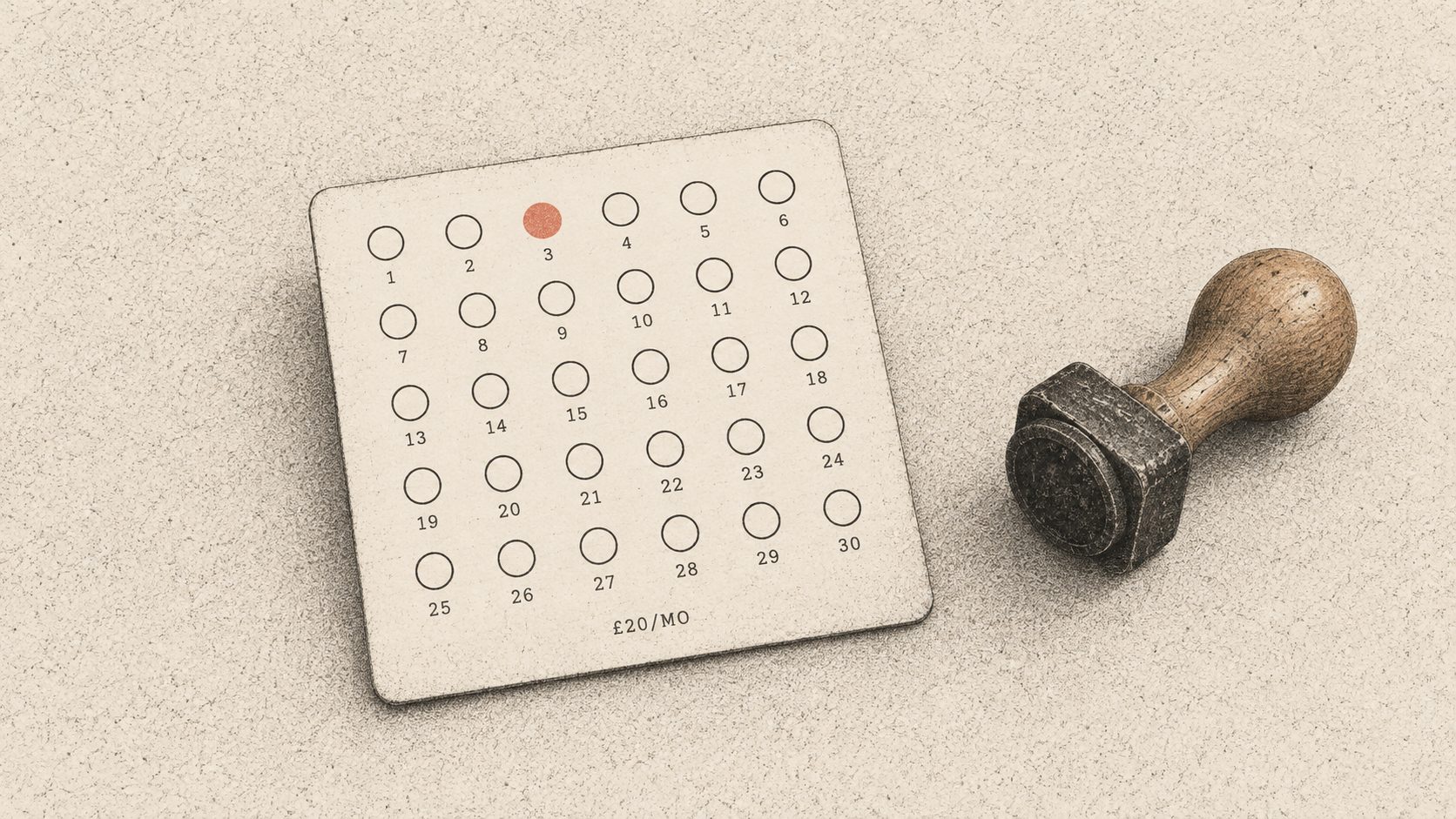
Here's the thing the £20-a-month plans don't advertise: the models behind them are mostly available somewhere else for free, or for pennies. Google gives its Gemini models away to anyone who signs into the developer site. Microsoft serves OpenAI's reasoning models free inside Copilot. Your iPhone will talk to ChatGPT without an account. And pay-as-you-go Claude or GPT costs a light user about a pound a month.
What you're paying £20 for is packaging: the polished app, memory, voice, projects, higher limits. For heavy users that's worth it. For everyone else it's a convenience fee.
This guide is the side doors: which ones are real, what each costs you in privacy or friction, and the sums that tell you whether to stop paying for AI.
Door 1: Google AI Studio, the free Gemini most people never see
Google AI Studio is where developers test Gemini, but it's a chat window with a model picker and it works for anyone with a Google account. Google's billing page, updated this month, says "AI Studio usage remains free of charge" unless you attach a paid key.
The free tier includes the current Flash models, Gemini 3.8, 3.7 and 3.6 Flash, plus the older 2.5 Pro, with the full million-token context window. Tokens are the units AI text is billed in, roughly 1,000 to 750 words, so that's a very large document. What it doesn't include is Gemini 3.1 Pro, which is paid-only on the API. If Pro is what you pay Google for, this door doesn't replace it.
Google no longer publishes exact free-tier limits; it tells you to check them inside AI Studio, and I couldn't verify a number.
The catch is in the terms. For unpaid use, "Google uses the content you submit to the Services and any generated responses to provide, improve, and develop Google products and services", and "human reviewers may read, annotate, and process your API input and output". Google's own advice: "Do not submit sensitive, confidential, or personal information." Treat it as a public workbench, not a diary.
Door 2: Copilot gives you OpenAI's reasoning models for free
Microsoft Copilot is easy to dismiss as the thing in the Windows taskbar. Its free tier is better than that.
Microsoft's support page lists the modes: Quick response, Think Deeper, Study and learn, Smart and Search. Smart is "powered by GPT-5". Think Deeper is "powered by the latest reasoning models from OpenAI", and it's available to free users, with Microsoft 365 subscribers getting "priority access whenever capacity is limited". Microsoft doesn't say which OpenAI model answers on a given day, and it's integrating its own MAI models too, so treat this as "OpenAI-class" rather than a specific version.
For thinking-heavy questions, planning, maths, working through a decision, this is the closest free thing to ChatGPT's paid thinking modes. No sign-in is needed for basic chat.
Door 3: ChatGPT with no account, through your iPhone
If you have a recent iPhone or Mac, Apple Intelligence can hand requests to ChatGPT through Siri and Writing Tools. OpenAI's help page is unambiguous: "You can always use ChatGPT through Apple's integrations without logging into a ChatGPT account, to ask questions, get help writing messages, or analyze an image or document."
Better still, the privacy terms are stricter than the app's. When you're not signed in, OpenAI says it "does not receive your IP address, store your requests, or use them to train AI models".
You enable it in Settings under Apple Intelligence and Siri, then tap Enable ChatGPT. Apple's own page no longer mentions ChatGPT by name and more assistants are reportedly arriving in iOS 27, so check the toggle exists on your device before relying on it.
Door 4: Pay-as-you-go, the trick that actually saves the money
Every AI company sells the same models by the token to developers, and you don't have to be a developer to buy them. You need a prepaid credit and a free app to chat through.
The credit. OpenAI's minimum purchase is $5. Anthropic works on prepaid credits too, though I couldn't find a stated minimum. Google's paid tier starts at $5. All three say credits expire after a year.
The app. Jan is free, open source, installs on Mac or Windows like any other app, and takes OpenAI, Anthropic and Google keys. Chatbox does the same and adds phone apps. You paste your key once and chat as normal.
The sums. Say you send 100 messages a month, and because a chat re-sends its history each turn, each message carries around 2,000 tokens in and 500 out. At current API prices:
- Gemini 3.8 Flash ($0.75 in, $3.75 out per million): about 35 cents a month.
- Claude Sonnet 5 ($2, $10): about 90 cents.
- GPT-5.6 Terra ($2, $12): about $1.
- Claude Opus 5 ($5, $25): about $2.25.
- Claude Fable 5.1, the top model ($10, $50): about $4.50.
Multiply by 10 for a heavy user at 1,000 messages a month and Opus lands at $22.50, roughly where the subscription is. So the break-even for a flagship model is somewhere around 800 to 1,000 messages a month. Below 500, pay-as-you-go wins comfortably.
There's a privacy bonus. All three companies state that paid API traffic isn't used to train their models by default, a better deal than most free consumer tiers offer.
Door 5: The free months you might already be owed
Companies are giving paid AI plans away as sweeteners, and most people never claim them.
- Revolut UK customers get ChatGPT Go free for three months on Standard and Plus, six on Premium, 12 on Metal and Ultra, in a promotion running to 29 July 2027. It converts to a paid subscription afterwards unless you cancel 24 hours before billing, so diarise it.
- Pixel 10 Pro, Pro XL and Pro Fold buyers get 12 months of Google AI Pro if redeemed by 31 October 2026. Pixel 11 phones get six months.
- Samsung Galaxy S26 buyers in the UK are offered six months of Google AI Pro, "worth £113" in Samsung's words.
- Students in the UK can claim a free year of Google AI Plus with ID verification, and a discounted AI Pro for up to four years.
And if you want a cheaper paid ChatGPT rather than a free one, ChatGPT Go is $8 a month in the US, with "10x more messages, file uploads and image creation than the free tier".
Door 6: The plan you already pay for
A Google AI Pro subscription is a Google One plan: Gemini in Gmail and Docs, NotebookLM, at least 5 TB of storage. A Microsoft 365 Personal or Family plan now includes Copilot in Word, Excel and Outlook, for the subscription owner only. If either is on your statement, a second chatbot subscription is buying a second app for the same job.
Who should still pay
My judgement, having run the numbers: pay for one chatbot if you use it most days and rely on memory, voice, projects or file uploads, because none of the side doors do those well. Pay for the $100 and $200 tiers only if you run coding agents or research jobs for hours at a time.
Everyone else should put $5 on an API account, install Jan, and see how long it lasts. Usually it's quite a while.
Where it goes wrong
Pasting private things into AI Studio. Free AI Studio traffic can be read by humans and used to improve Google's products. The same is broadly true of free consumer chatbots, so read up on how private your AI chats really are before moving sensitive work anywhere free.
Expecting the side doors to remember you. AI Studio, Copilot and the API route have no cross-chat memory, no projects, and patchy voice. If those are what you'd miss, the subscription is doing real work.
Letting a promo roll over. Every free-months offer above converts to a paid plan automatically. Set a reminder for the week before it ends.
Forgetting credits expire. OpenAI's and Anthropic's prepaid credits are gone after a year, unused or not, and are non-refundable. Buy $5, not $50.
Long chats on the API. Because each turn re-sends the whole conversation, a 100-message chat costs far more than 100 short ones. Start new chats often. The same logic applies to stretching a Claude allowance on the free or Pro plan.
Flash prices double in January. Google's introductory API prices for the Flash models run until 31 December 2026, then go from $0.75 to $1.50 in and $3.75 to $7.50 out. Still cheap, but your sums will change.
Cancelling properly
Cancel where you bought it. On the web: ChatGPT is Settings, Billing, Cancel plan; Claude is Settings, Billing, Cancel, at least 24 hours before renewal; Google AI Pro is Manage subscription inside Gemini; Microsoft 365 is account.microsoft.com/services; Perplexity is Settings, Subscription.
If you subscribed through the App Store or Google Play, those paths won't work, and OpenAI warns that people who subscribe on the web while an app-store subscription is still running pay twice. Check your phone's subscription list first. On all five, you keep access until the period ends and your chat history survives.
Frequently asked questions
Is the free tier of ChatGPT the same model as Plus? No. Free gets GPT-5.6 Luna, the smaller model, with "unlimited everyday text chats" but tighter limits on uploads, images and voice. Plus gets the larger Sol with the thinking levels. The API route above gives you the larger model by the token.
Is there a free side door for Claude? Not a hidden one. The free plan at claude.ai is the same models with lower limits, and the API through Jan or Chatbox is the cheap route. Nothing gives Claude away the way AI Studio does Gemini.
Will Google AI Studio cut me off? Possibly, at busy times, because Google no longer publishes the free limits. The paid tier starts at $5 and stops using your prompts for training, which for some people is reason enough.
Isn't the API confusing to set up? Less than it sounds: create an account, buy credit, copy a key, paste it into an app. Ten minutes, once. The confusing part is the pricing, and the breakdown of which models really cost the most per task covers the traps.
Try the cheapest door first
Put $5 on an API account tonight, install Jan, and use it as your default for a fortnight. Then check the usage dashboard. Under a pound, and you can stop paying for AI with a clear conscience.
£15, and congratulations: you're a heavy user, and the subscription was the bargain all along.